Researches – Studies

“Study on Player Participation in the Regulated Market”

The identification of the key demographic, socio-economic, and other characteristics of gambling service consumers is of critical importance in determining the parameters and criteria for the design and implementation of policies, as well as for decision-making regarding the adoption of Responsible Gambling measures.

Against this background, the Hellenic Gaming Commission (HGC) commissioned Pulse RC (a member of SEDEA) to conduct a nationwide quantitative survey for 2025. The survey was conducted at the beginning of the year on a sample of 2,001 individuals aged 18 and over across Greece, through telephone (CATI/CASI) and online (CAWI) interviews using a structured questionnaire.

Objectives of the Survey:
  • To examine the relationship between demographic and socio-economic characteristics and participation in gambling activities.
  • To define player profiles by game type.
  • To assess the prevalence of problematic gambling behavior.
  • To analyze the impact of gambling on everyday life and quality of life.
  • To record perceptions and attitudes regarding gambling addiction.
Key Findings
Motivations for Gambling Participation

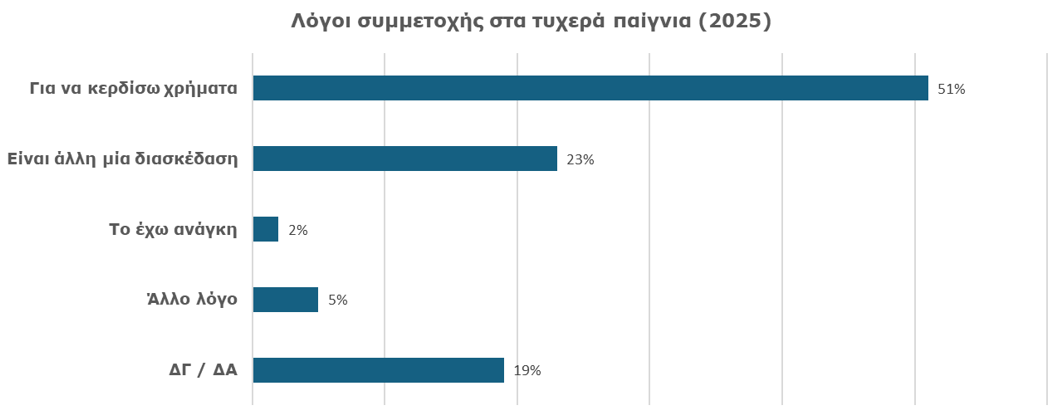
51% cite financial reward as their primary motivation for participation.
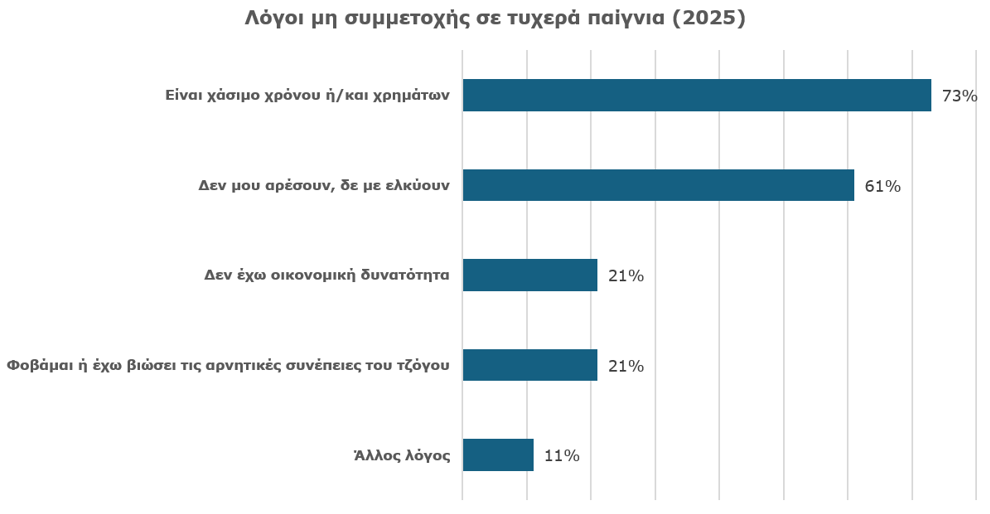
73% of non-players consider gambling participation a waste of time and/or money.

Reasons for Non-Participation in Gambling Activities

The most common reason cited for not participating in gambling activities is the belief that gambling is a waste of time and/or money, as stated by 73% of non-participants.
Overall Gambling Participation of Greek Citizens


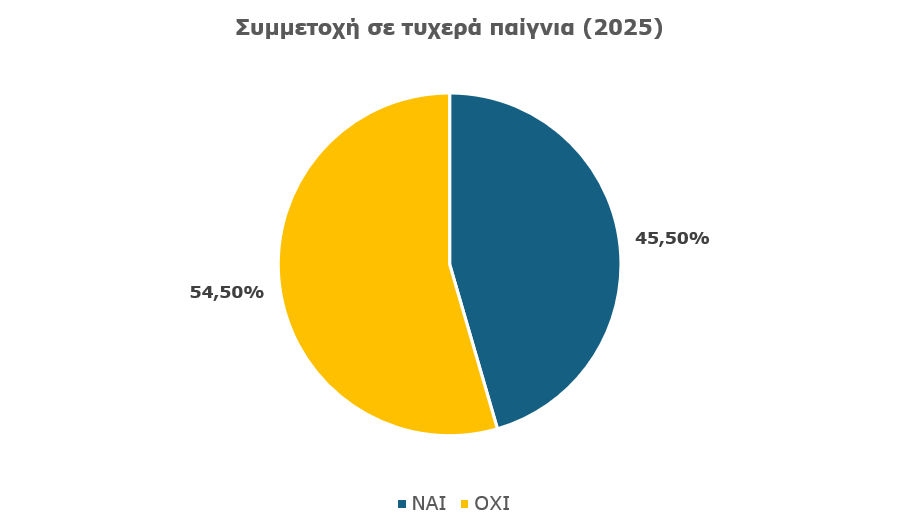
54.5% of Greeks reported participating in at least one gambling activity in 2025.
Study on Gambling Activities


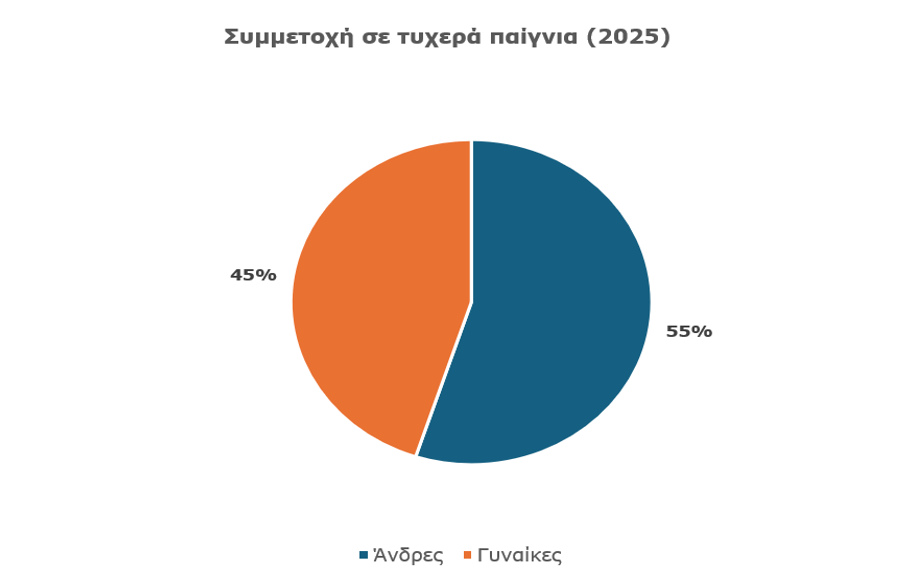
55% Men – 45% Women

Study on Gambling Activities


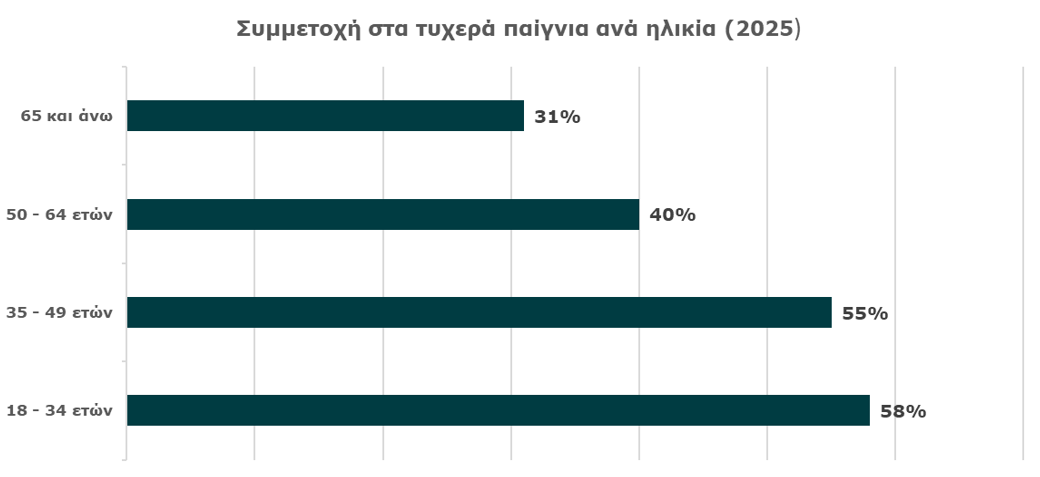
Participation is highest among the 18–34 age group (58%).

Motivations for Gambling Participation

51% cite financial reward as their primary motivation for participation.
73% of non-players consider gambling participation a waste of time and/or money.

Study on Gambling Activities

Private sector employees (61%) and unemployed individuals (58%)
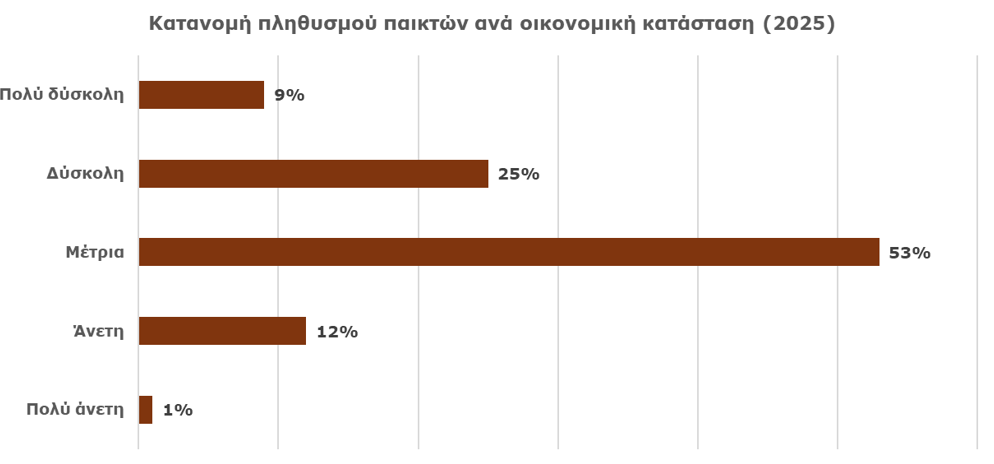
Participation reaches 87% among individuals reporting a moderate or difficult financial situation.
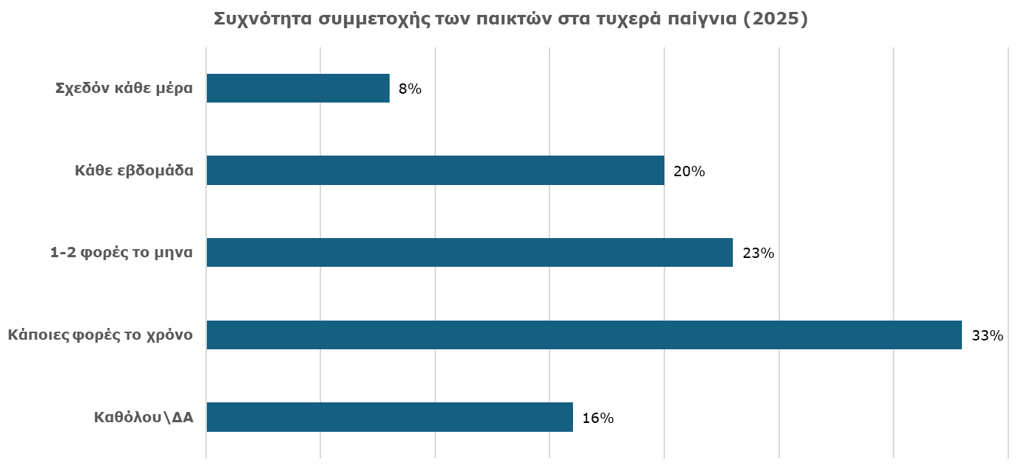
Study on Gambling Activities

33%: participate a few times per year / 23%: participate once or twice per month
20%: weekly / 8%: almost everyday

Study on Gambling Activities

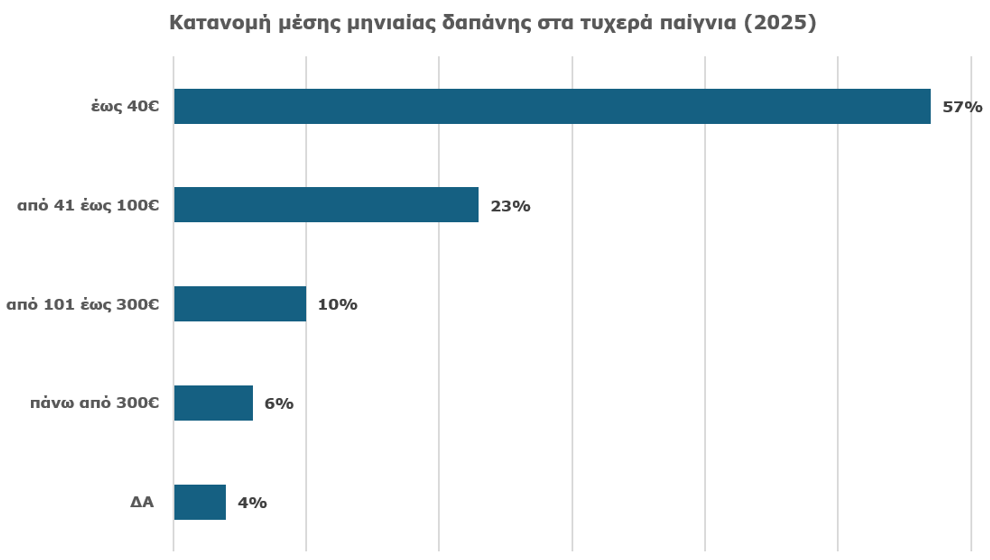
57% spend up to €40 per month
39% spend more than €40 per month 6% spend more than €300 per month
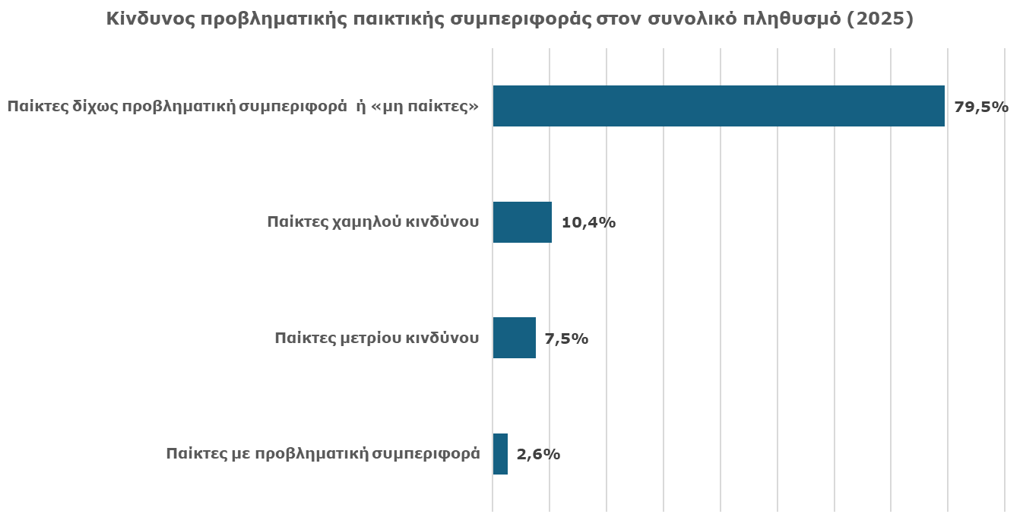
Study on Gambling Activities

79,5%: without problem / 10.4%: low risk
7,5%: medium risk / 2,6%: high risk

Study on Gambling Activities

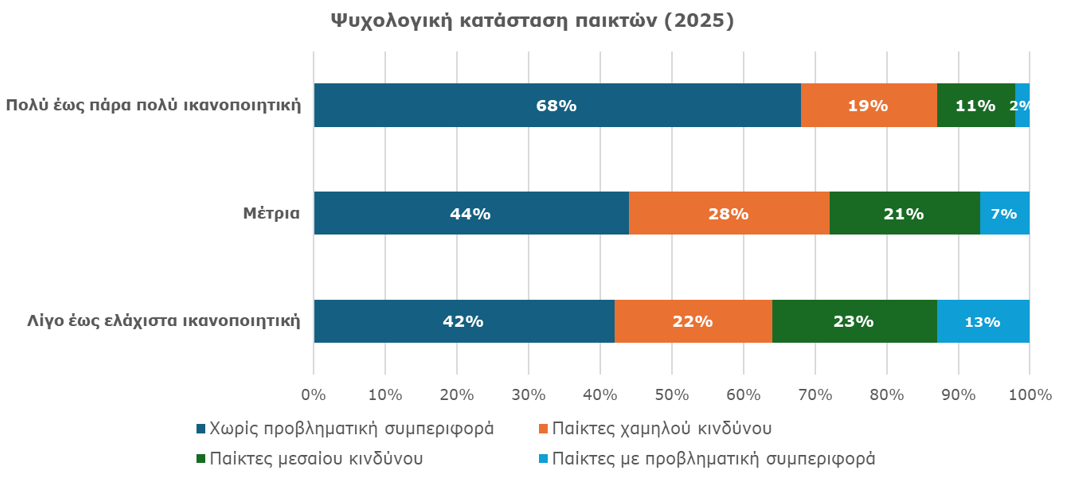
Lower psychological well-being → higher gambling risk
2% (high psychological satisfaction)/ 13% (low psychological satisfaction)
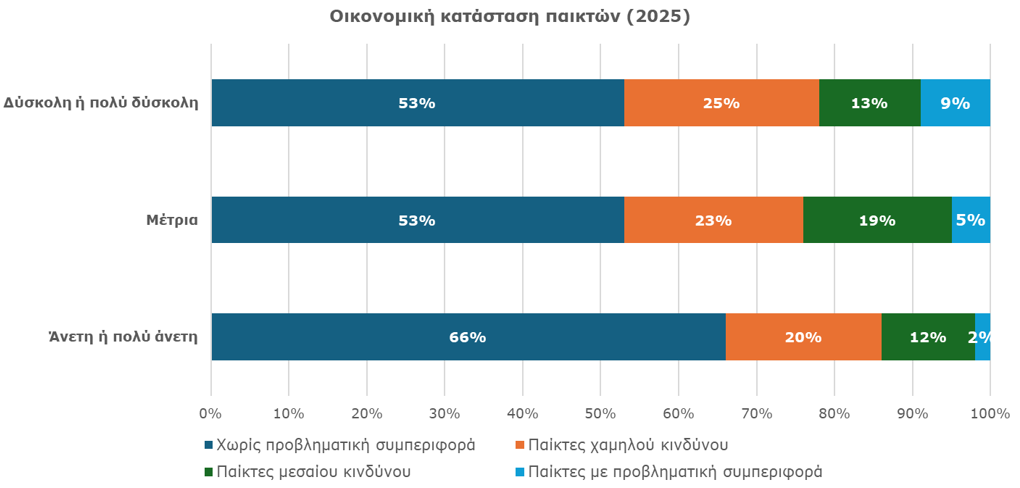
Study on Gambling Activities

Problematic gambling behavior:
2% (comfortable financial situation) / 9% (difficult financial situation)
Conclusion

The survey confirms the crucial role of the licensed network in ensuring a regulated and closely supervised gambling environment. The analysis of data relating to player participation, motivations for game selection, financial indicators, and responsible gambling metrics contributes to a better understanding of market developments and supports the HGC in more effectively carrying out its responsibilities for player protection and the proper functioning of the gambling market.

“An Investigation into Illegal Gambling Networks”

As part of its strategy to combat the illegal gambling market, the Hellenic Gaming Commission (HGC) conducted a nationwide survey in 2025 aimed at assessing the scale of the phenomenon, the characteristics of participants, and the key factors influencing participation in unlicensed gambling networks.
The survey findings provide important insights into the penetration of the illegal gambling market, player behavior patterns, and the challenges faced by regulatory and supervisory policies. At the same time, the findings reveal critical insights that support the development of targeted prevention, monitoring, and public awareness measures.
The survey serves as a key evidence-based tool supporting the HGC’s strategy for player protection, the promotion of regulatory compliance, and the reduction of illegal activity within the gambling market.

Objectives of the Survey:

The main objectives of the survey were:

  • Understanding the level of public awareness regarding the phenomenon of illegal gambling and its personal, social, economic, and political implications
  • Assessing participation in illegal gambling activities and estimating their prevalence across the country
  • Profiling players through the analysis of their demographic and socio-economic characteristics
  • Investigating the motivations and factors that lead individuals to participate in illegal gambling activities
  • Estimating the economic dimensions associated with the illegal gambling market
Methodology

The survey was commissioned by the Hellenic Gaming Commission (HGC) and conducted by Kapa Research (a member of SEDEA) between 29 January and 13 March 2025, in accordance with ESOMAR’s Code of Conduct.

  • Sample: 7,963 individuals across Greece
  • Method: Face-to-face interviews using a structured questionnaire
  • Participant Age: 18+
  • Criterion: Participation in at least one gambling activity during the last 12 months, with no registration requirement.
  • Research Subsample: The number of individuals who reported participating in illegal gambling activities in 2025 amounted to 842 respondents nationwide.
Key Findings
Study on Gambling Activities

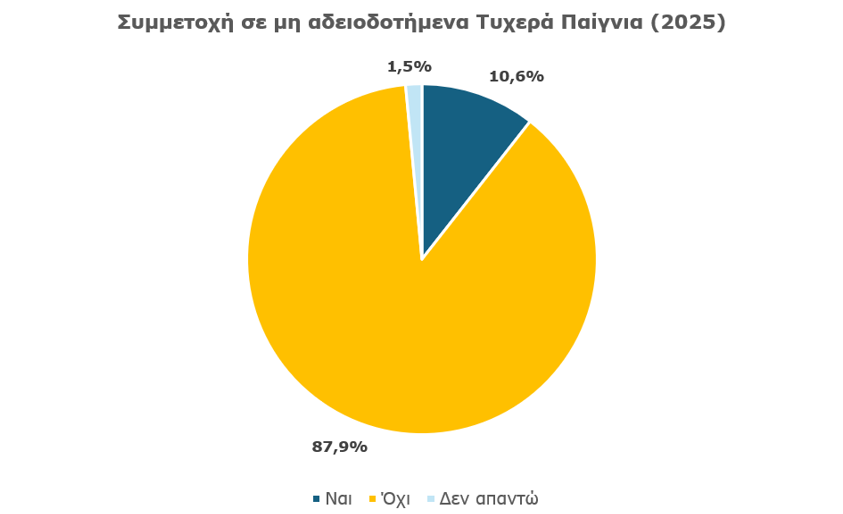
10.6% of the population participated in unlicensed gambling activities at least once during 2025.
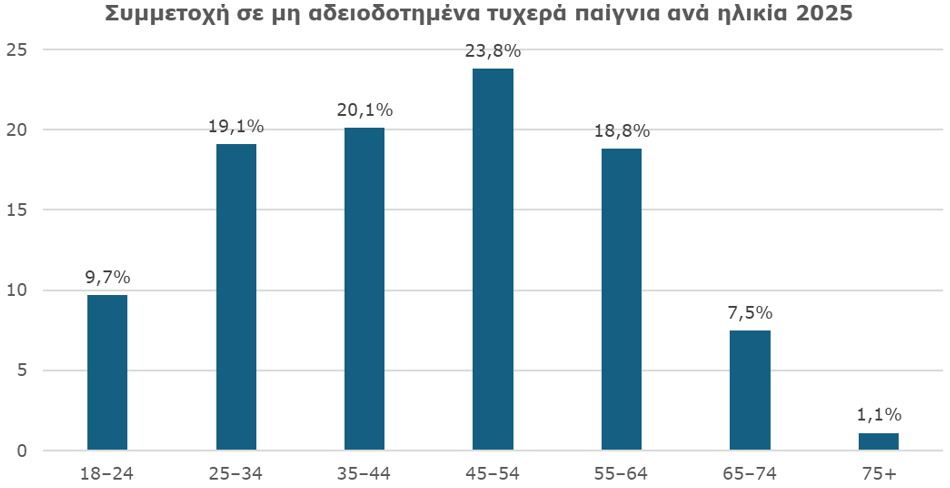
Study on Gambling Activities

48.9% of unlicensed gambling players belong to younger age groups (up to 44 years old).

Study on Gambling Activities

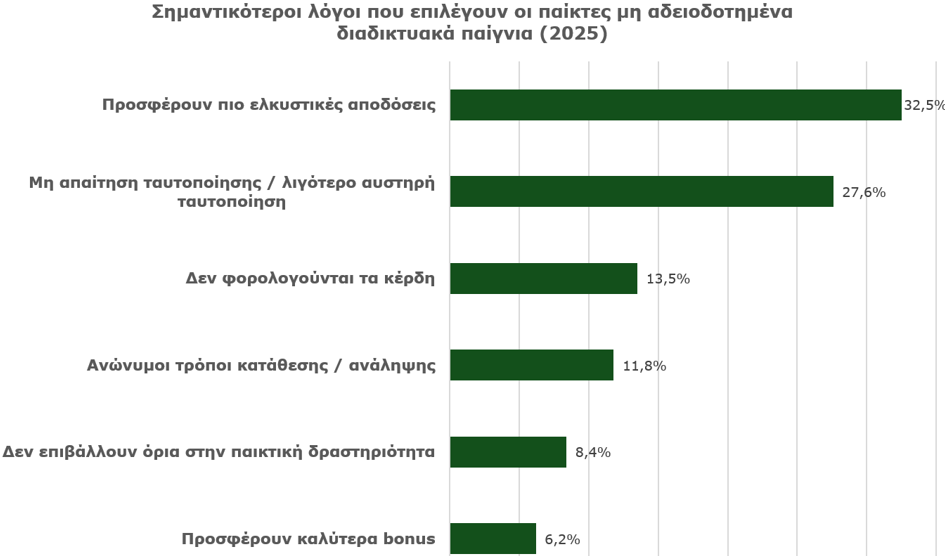
The main motivations for participation are attractive odds or bonuses (32.5%) and less stringent identification requirements (27.6%).
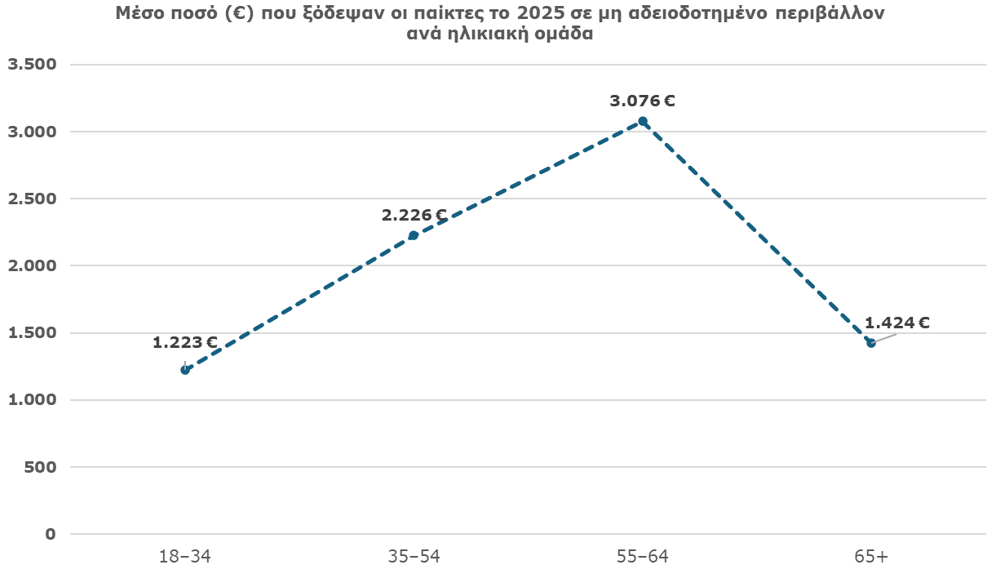
Study on Gambling Activities

The highest average expenditure is recorded among players aged 55–64 (€3,076), while the lowest is observed among players aged 18–34 (€1,223).

Study on Gambling Activities

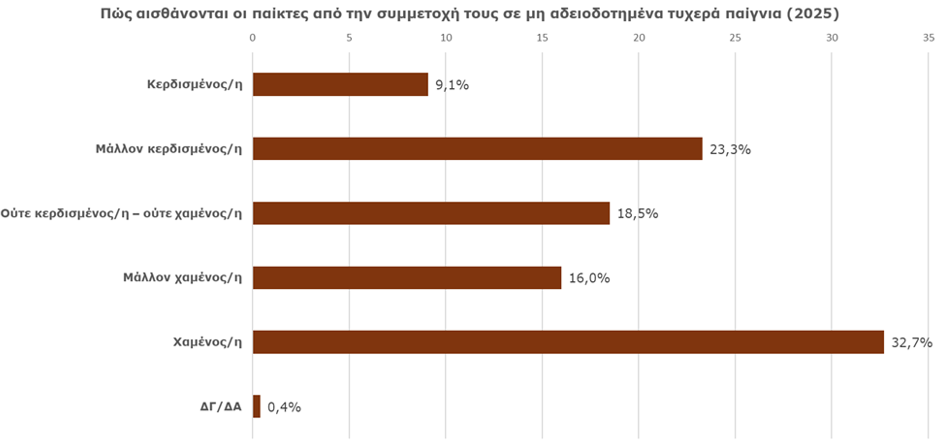
Approximately 48.7% of players participating in unlicensed gambling activities report feeling that they have lost or are more likely to have lost money, while 32.4% consider themselves winners or more likely to be winners.

Study on Gambling Activities

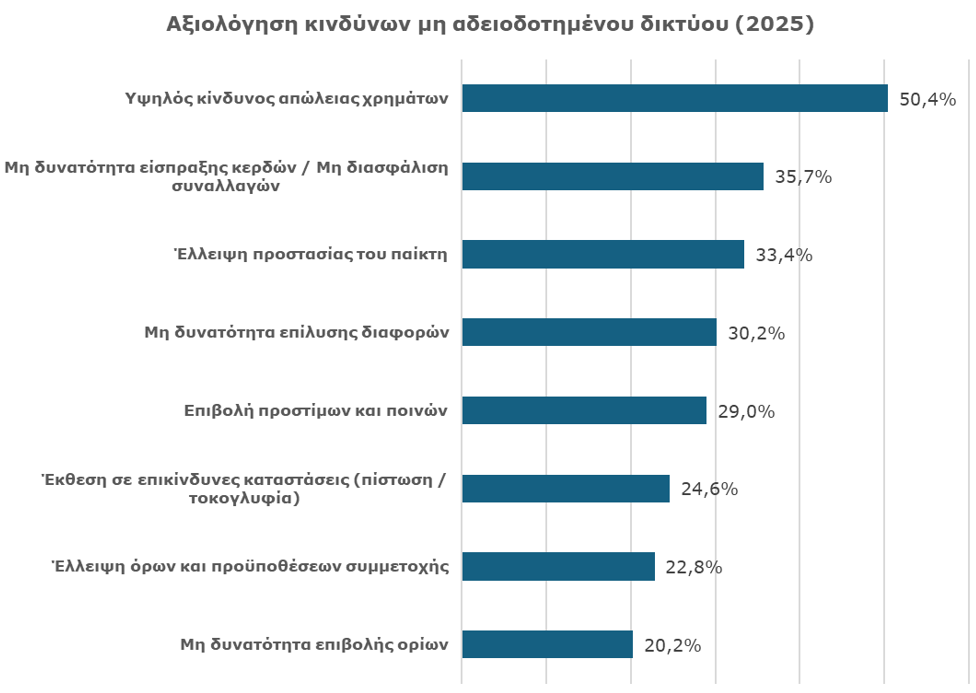
The most significant risks associated with participation are financial loss (50.4%) and the lack of secure transactions (35.7%).

Conclusion

The survey findings provide valuable insights into player participation in unlicensed gambling networks, the characteristics of participants, the motivations behind their choices, and the financial dimensions of the phenomenon. The analysis of the results highlights the factors influencing player behavior, as well as their perceptions of the risks associated with participation in unlicensed gambling environments. Among the most significant risks identified are financial loss, the inability to collect winnings, and the absence of institutional safeguards and consumer protection mechanisms. The survey results contribute to a better understanding of market developments and support awareness-raising, prevention, and regulatory oversight initiatives.